As the holiday season approaches, cybercriminals are looking for opportunities to exploit busy employees, rushed payments, and overlooked security procedures.
November marks the beginning of one of the busiest times of the year for businesses. Between year-end deadlines, holiday purchases, employee vacations, and increased financial transactions, there's plenty competing for everyone's attention.
Unfortunately, cybercriminals know this too.
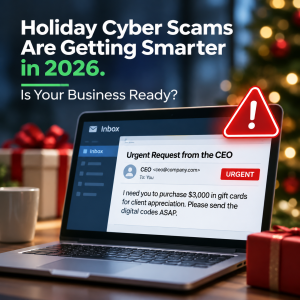
Imagine an employee receiving an urgent message from their CEO requesting gift cards for clients. The message appears legitimate, the timing makes sense, and the employee wants to help. Before anyone questions the request, thousands of dollars have been handed over to a scammer.
Now imagine the same deception involving a vendor payment worth hundreds of thousands of dollars.
These aren't just hypothetical concerns. Business email compromise (BEC), fraudulent invoices, and executive impersonation have caused significant financial losses for organizations worldwide.
One widely reported example involved Luxembourg-based chemical manufacturer Orion S.A., which disclosed approximately $60 million in losses connected to fraudulent wire transfers in 2024.
The lesson? Cybercriminals don't always need to hack into your systems. Sometimes, they simply need to convince an employee to trust the wrong message.
For businesses in Bellevue, Seattle, Kirkland, and Redmond, November is an ideal time to review cybersecurity practices before the holiday rush reaches its peak.
5 Holiday Cyber Scams Your Employees Should Watch for in 2026
Cybercriminals continue to use familiar scams, but increasingly convincing impersonation tactics and AI-generated messages can make fraudulent requests harder to recognize.
Here are five threats businesses should prepare for this holiday season.
1. Executive Impersonation and Gift Card Scams
The scam: An employee receives an urgent email or text appearing to come from the CEO or another manager requesting gift cards, payments, or sensitive information.
Scammers may use publicly available company information to make their messages more convincing. AI-generated messages can also imitate professional writing styles.
How to protect your business: Establish a written policy requiring independent verification of unusual financial requests. Employees should never purchase gift cards or transfer money based solely on an email or text.
2. Fake Invoices and Vendor Payment Changes
The scam: Cybercriminals impersonate trusted vendors or compromise legitimate email conversations to request payments to new bank accounts.
During the holiday season, when businesses are processing year-end invoices and payments, these requests may appear routine.
How to protect your business: Verify changes to banking details by calling a trusted contact using a phone number already on file. Require a second employee to approve significant transactions.
3. Fraudulent Shipping and Delivery Notifications
The scam: Employees receive fake shipping notifications claiming that a package is delayed, requires payment, or needs an address confirmation.
These messages often contain links to fraudulent websites designed to steal login credentials or payment information.
How to protect your business: Avoid clicking unexpected delivery links. Verify shipments directly through official carrier websites or trusted tracking systems.
4. Malicious Holiday Invitations and Attachments
The scam: An employee receives what appears to be a holiday party invitation, updated company schedule, or seasonal document containing a malicious attachment or link.
Opening the file or following the link could expose the business to malware or credential theft.
How to protect your business: Train employees to verify unexpected attachments, even when they appear to come from familiar contacts. Keep email security tools and endpoint protection updated.
5. Fake Charities and Holiday Fundraising Campaigns
The scam: Fraudsters create convincing donation requests, fake charity websites, or fraudulent company fundraising campaigns.
Employees may be encouraged to donate through unfamiliar payment portals or share sensitive information.
How to protect your business: Verify charities independently and use approved donation platforms. Establish clear procedures for company-sponsored fundraising.
Why Holiday Cyber Scams Are Becoming Harder to Detect
Today's cybercriminals don't always rely on obvious spelling mistakes or suspicious-looking emails.
Fraudulent messages can imitate legitimate business communications, reference real employees, and create convincing reasons for urgent action.
Artificial intelligence has made it easier for attackers to generate polished messages and potentially impersonate voices or identities.
This creates a challenge for businesses relying solely on employees recognizing suspicious emails.
Even well-trained employees can make mistakes when they're rushed, distracted, or pressured to act quickly.
That's why effective cybersecurity requires more than awareness. Businesses need clear verification procedures, strong access controls, and reliable security monitoring.
Your November 2026 Holiday Cybersecurity Checklist
Before the holiday season gets into full swing, take time to review these essential security measures:
- Implement a two-person approval process: Require additional verification for significant payments and unusual financial requests.
- Establish a gift card policy: Make it clear that employees should never act on unexpected gift card requests without independent approval.
- Verify vendor payment changes: Confirm new banking information through trusted contact details, not information provided in the suspicious message.
- Enable multifactor authentication (MFA): Add an extra layer of protection to business email, financial accounts, and cloud applications.
- Train employees on emerging scams: Review executive impersonation, phishing, fraudulent invoices, and AI-assisted deception.
- Review your cybersecurity defenses: Ensure systems are updated, backups are tested, and suspicious activity is monitored.
These steps can help reduce the likelihood of successful attacks and strengthen your business's overall security posture.
The Real Cost of a Holiday Cyberattack
Financial theft is only one consequence of a successful cyberattack.
For small and mid-sized businesses, an incident during the holiday season could also result in:
- Business interruptions during critical year-end operations.
- Lost productivity while employees and IT teams respond.
- Compromised customer or financial information.
- Damage to customer relationships and business reputation.
- Unexpected recovery expenses and potential regulatory obligations.
Even a relatively small incident can create significant disruption when businesses are already operating with reduced staffing or tight deadlines.
The goal isn't simply to prevent financial losses. It's to protect your operations, your employees, and the customers who depend on your business.
How TeamLogic IT Bellevue Helps Businesses Stay Protected
At TeamLogic IT Bellevue, we understand that small and mid-sized businesses need dependable technology and practical cybersecurity solutions, especially during busy periods.
We help businesses throughout Bellevue, Seattle, Kirkland, and Redmond strengthen their IT environments through proactive managed IT services and cybersecurity support.
Our services help businesses:
- Identify potential security vulnerabilities.
- Strengthen email and network security.
- Maintain updated and monitored systems.
- Improve data backup and disaster recovery preparedness.
- Reduce avoidable downtime and technology-related disruptions.
- Support internal IT teams with additional expertise and resources.
Whether you have an existing IT provider, an internal IT team, or need fully managed IT support, having a proactive cybersecurity strategy can make a meaningful difference.
Don't Let Cybercriminals Steal Your Holiday Success
As November begins and businesses prepare for the holiday season, now is the time to strengthen your defenses.
Cybercriminals don't take holidays, and they often look for opportunities when businesses are busiest.
The question isn't whether your employees know scams exist. It's whether your business has the right safeguards in place when someone encounters one.
A few proactive measures today could help prevent a costly disruption tomorrow.
Is Your Business Prepared for the Holiday Cyber Threats Ahead?
TeamLogic IT Bellevue can help you take a closer look at your IT environment, identify potential security gaps, and explore practical ways to strengthen your defenses before the year ends.
Schedule a complimentary IT consultation with our team to discuss your business's cybersecurity needs.